
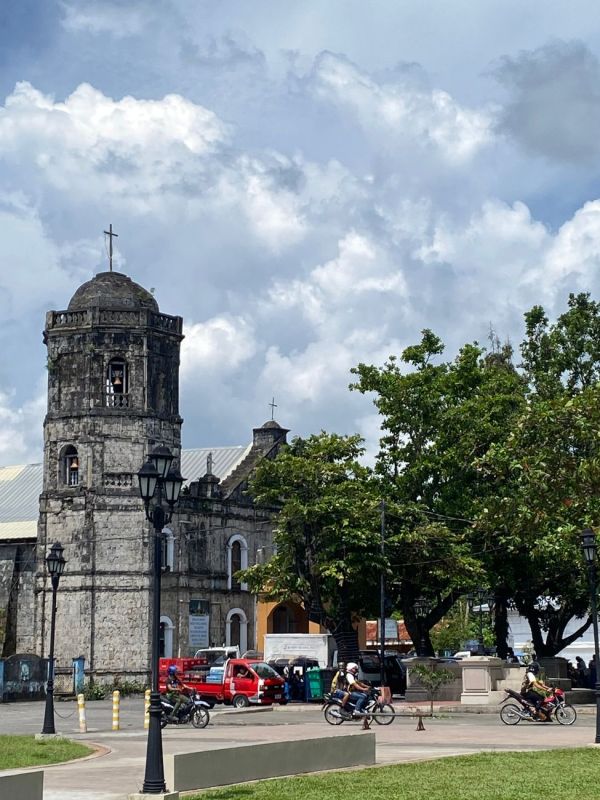
With thanks to Ron Atilano
The tanága and the delít are traditional short poetic forms from the Philippines, each with 4 lines and an AAAA rhyme scheme. The tanága has 7 syllables per line; the delít has 8. The poems were part of an oral tradition that existed well before Spanish colonisation in the 1500s, and some were recorded by missionaries as they learnt the Tagalog language. The form experienced a resurgence in the 1960s.
In Tagalog, the rhymes used are frequently slant/imperfect. Hard sounds such as b/d/t rhyme together (eg bed and bet), and soft sounds such as l/m/n/r rhyme together (eg bell and ben).
At the heart of these forms is metaphor, used to show insight or to present a riddle. They are often aphoristic. The subject of the poem is usually not mentioned.
They typically have one of three structures:
- deductive (line 1 is the premise and 2-4 support it)
- comparative (lines 1&2 are counterposed by lines 3&4)
- inductive (lines 1-3 describe and line 4 is the punchline)
Here is a modern adapation of the tanága in a sequence by Luisa A. Igloria:
https://www.poetryfoundation.org/poetrymagazine/poems/156054/tanaga-what-hailed-us-what-we-made
Here’s my first attempt at a tanága (without the rhyme):
Inching past my defences,
whipping your striped cloak around.
Little vampire on my vein,
why are you stealing my blood?
Can you tell what I’m describing? (Hint: I’ve posted about this recently.)
If you’d like to try writing in one of these forms, I’d love to see what you come up with!
Photo by Bonna Joseph on Pexels.com
Discover more from Wordflower poetry & fiction
Subscribe to get the latest posts sent to your email.

