
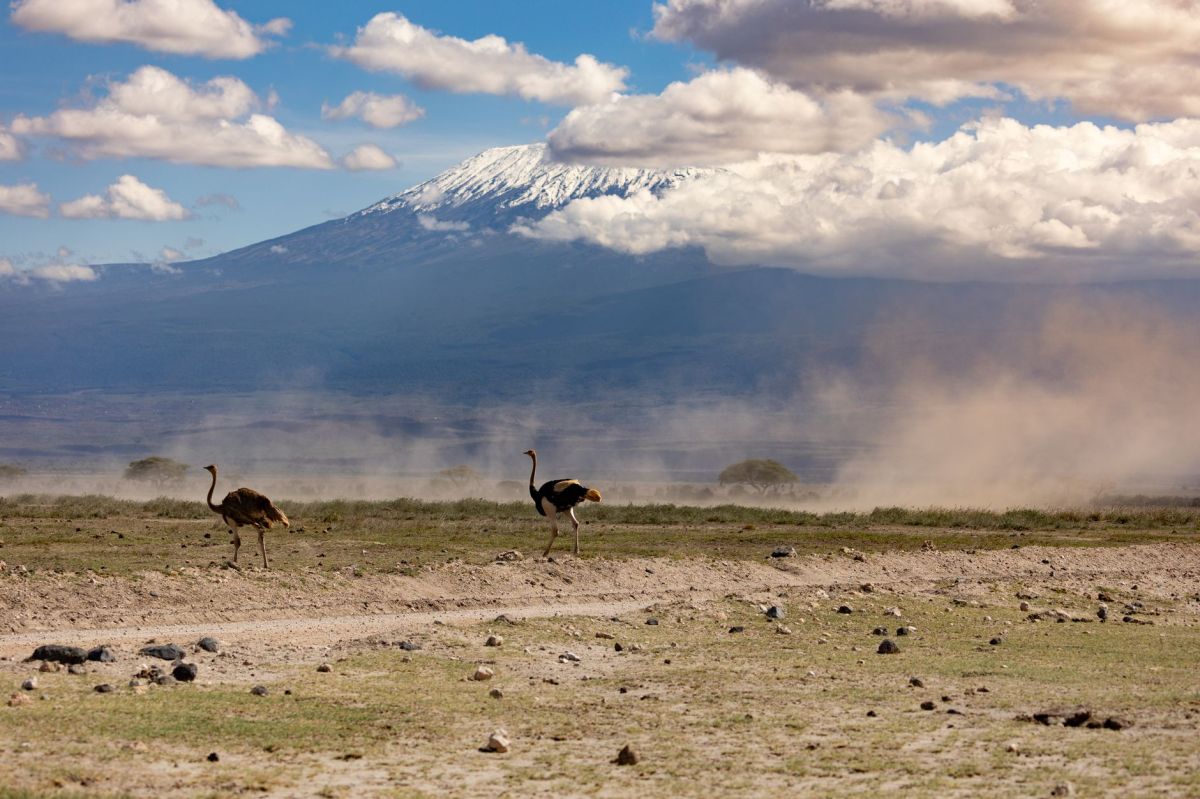
The morning Catherin entered the Rift Valley, the earth seemed to be remembering something the world had tried very hard to forget. She had travelled from Australia with a suitcase filled with clothes, a camera she barely used, three books she had promised herself she would read beneath African skies, and a heart that had crossed an ocean without understanding that some journeys are not measured in kilometres. She had come to see Kenya—the red roads, the escarpments falling like enormous pages from the hands of God, the lakes sleeping beneath flamingoes, the hills wearing forests like green crowns, and the long golden grasslands where cattle moved slowly beneath an immense blue sky.
Yet Africa, she would learn, was not a postcard. It was not merely the colour of sunset over the savannah or the laughter of children running beside a tourist vehicle. Africa was also the unfinished sentence of a girl. It was the silence behind certain doors. It was the mother who lowered her eyes because tradition had become heavier than her voice. It was the father who mistook fear for obedience. It was the village elder who called violence culture because he had never been taught that culture could evolve without dying. And somewhere along a lonely road between the hills and the valley, Catherin would discover that the most important landmark in Kenya was not a mountain, a lake, or a national park, but a frightened child running barefoot toward freedom.
She had spent several days travelling through the Rift Valley, watching Kenya unfold with the grandeur of a film too beautiful for any screen to contain. Morning mist hovered above the escarpment like white silk abandoned by the night. Acacia trees stood in the distance, solitary and patient, their shadows stretched across the earth. Shepherds walked behind their cattle, wrapped in blankets against the cold. Women carried firewood upon their backs with a strength that seemed older than history. Children waved whenever Catherin’s vehicle passed, their hands rising into the air like little flags of welcome. She had taken photographs of landscapes, but after a while she began putting her camera down. She discovered that some beauty becomes smaller when imprisoned inside a frame. She wanted to remember the wind itself—the smell of wet soil, the distant bells of livestock, the laughter carried from homesteads, the evening smoke rising from cooking fires like prayers ascending toward heaven. On the fourth morning, however, the landscape changed. The road became narrower, the silence deeper, and the driver slowed as though he had sensed something ahead.
Catherin looked through the window and saw a figure moving through the grass. At first she thought it was a child playing. Then she saw the terror in the child’s movement. The girl was running as though the entire earth behind her had become an enemy. Her dress was dusty. Her hair had loosened. One shoe was missing. She stumbled, caught herself, and continued. There was no playfulness in those feet. There was desperation. Catherin leaned forward and told the driver to stop. The vehicle slowed. The girl looked toward them, and for one suspended second her eyes met Catherin’s. They were the eyes of someone who had learned too young that danger could wear a familiar face. The vehicle stopped. The girl hesitated. She seemed caught between the instinct to trust and the instinct that had kept her alive. Catherin stepped out slowly, keeping her hands visible. She did not rush toward her. She did not demand an explanation. She simply stood beneath the enormous Kenyan sky and said softly, “You are safe here.” The girl stared at her as though those four words belonged to another language. Then her knees gave way.
Her name was Chebet. She was thirteen years old, and she had run from home before dawn because she had overheard adults discussing what would happen to her. She did not understand every word, but she understood enough. She knew there would be a ceremony. She knew women had been preparing things. She knew someone had told her to be brave. She knew that when adults repeatedly tell a child to be brave about something she does not want, bravery is often another name for fear imposed upon the powerless. She had heard her aunt whisper that she was “old enough.” She had heard another voice say that this was how their mothers became women. And Chebet, lying awake beneath a thin blanket, had understood the terrible arithmetic of the morning: if she stayed, something would be done to her body that she had not consented to. Something irreversible. Something people around her might call tradition while her heart called it terror. So she had waited until the house became quiet, opened the door, and run. She had run past the cooking place, past the sleeping cattle, past the familiar tree beneath which she had played as a child, past the path where she had once walked beside her mother. She had run until the village disappeared behind her, until the sun rose over the hills, until her feet hurt so badly that every step became a question. She did not know where she was going. She only knew where she could not remain.
Catherin listened. That was the beginning. She listened without interrupting. She listened while Chebet spoke in fragments, then stopped, then cried, then apologized for crying. Each apology wounded Catherin more than the tears. Why should a child apologize for being afraid of violence? Why should innocence be trained to feel guilty for resisting pain? Why should a girl have to flee through a landscape she loved because the people who were supposed to protect her had decided that her body belonged to custom, ceremony, or someone else’s authority? Catherin had travelled thousands of kilometres to see Kenya, but suddenly Kenya was no longer scenery. It was this girl’s trembling hands. It was her dusty feet. It was the question in her eyes: If I tell you everything, will you believe me?
“I believe you,” Catherin said.
Chebet looked at her. Those words became the first bridge between them.
Catherin did not promise what she could not guarantee. She did not become a hero in the childish way stories sometimes manufacture heroes. She did not imagine that one foreign traveller could solve a problem woven through generations. Instead, she did the harder thing: she sought help. She contacted trusted local safeguarding professionals and authorities, and she found people who understood the community, the law, the risks, and the delicate work required to protect a child without exposing her to greater danger. She learned that rescuing someone was not merely carrying them away from danger. Sometimes rescue meant building a circle of people around them so that danger could not simply follow. It meant listening to the girl. It meant ensuring that Chebet’s voice mattered in decisions about her own future. It meant refusing the seductive simplicity of saviourhood and choosing the slower architecture of protection.
That evening, the Rift Valley burned beneath the setting sun. The hills became silhouettes. The clouds gathered in enormous golden formations. Somewhere far away, cattle bells sounded through the dusk. Catherin sat beside Chebet beneath the shade of a tree, and neither spoke for a long time. There are moments when language becomes too small. There are moments when two human beings can sit together in silence and understand that something sacred is happening—not because the world has become beautiful, but because someone has finally been heard.
Chebet eventually asked, “Are all countries like this?”
Catherin looked toward the horizon. “No country is free from violence,” she answered, “but no country should ever accept violence as destiny.”
Chebet was quiet. “Can a girl choose her own life?” she asked.
Catherin looked at her and answered, “Yes.”
“Even here?”
“Especially here.”
The wind moved through the grass, and somewhere inside Chebet, a door opened.
The days that followed were not easy. Fear does not disappear merely because a dangerous morning has passed. It remains in the body. It hides beneath sleep. It returns in dreams. Sometimes Chebet woke suddenly and believed she was back in the house, hearing voices outside. Sometimes she flinched when footsteps approached. Sometimes she became silent when adults spoke too loudly. Catherin learned that healing was not a straight road. It was a landscape of hills and valleys, of mornings when courage returned and evenings when fear came knocking again. But around Chebet gathered people who believed that her future was worth defending: trusted women, professionals, advocates, and people who did not ask her to forget what had happened but helped her understand that what happened was not the definition of who she was. And Catherin remained—not as the owner of Chebet’s story, but as its witness.
She had once imagined that travel meant collecting places. Now she understood that sometimes a journey collects responsibilities instead. She had crossed the Indian Ocean looking for landscapes and found a life standing at the edge of a road. She had expected to return to Australia with photographs of Kenya’s mountains and lakes. Instead, she would carry home the memory of a girl who had run barefoot toward tomorrow. One afternoon, Chebet stood at the edge of a hill overlooking the valley. The land below stretched endlessly, green and gold beneath the afternoon sun. Birds moved across the sky. The distant hills looked like sleeping giants. Chebet wore clean clothes now, her hair carefully braided, her feet protected by new shoes. Yet the greatest change was not visible in her clothing. It was in the way she stood. She no longer stood like someone waiting for permission to exist. She stood like someone beginning to understand that her life belonged to her.
“Catherin,” she said.
“Yes?”
“Do you think I can become anything?”
Catherin smiled. “I think you already became something.”
Chebet looked at her.
“Someone who survived long enough to choose.”
Chebet turned toward the horizon and smiled. It was a small smile, but history sometimes begins with small things: a girl refusing to disappear, a woman choosing to listen, a community deciding that silence is not protection, a law being allowed to become stronger than an excuse, a generation learning that tradition is not sacred when it destroys the dignity of the people it claims to honour. That evening, Catherin wrote in her journal beneath a small lamp. She wrote that the Rift Valley had taught her something no guidebook could have taught. She wrote that violence often hides behind ordinary doors, speaks ordinary words, wears ordinary clothes, and calls itself tradition, discipline, love, marriage, honour, or family. She wrote that gender-based violence does not become less cruel because a community has inherited it from the past. She wrote that a culture should be measured not only by what it preserves, but also by what it has the courage to change. Then she wrote Chebet’s name. She underlined it. Not because Chebet was a victim, but because she was a witness, because she was a survivor, because she was a girl whose future had nearly been stolen before she was old enough to imagine it—because her name deserved to stand where fear had once stood.
Months later, as Catherin prepared to leave Kenya, she returned to the place where she had first seen Chebet running through the grass. The road was quiet. The same hills stood in the distance. The same wind moved through the valley. But Catherin was not the same woman who had arrived from Australia. She had come searching for Africa; Africa had answered with a child. She had come searching for beauty; beauty had shown her its wounded face and asked whether she could stay. She had come believing that travel was about discovering the world; now she knew that sometimes the world discovers you.
Chebet stood beside her. “I used to hate this road,” she said.
Catherin looked at her. “Why?”
“Because I thought it was the road where I was running away.”
“And now?”
Chebet looked ahead. “It is the road where I began.”
The words entered Catherin like music. The sun was descending. The valley was turning gold. Two figures stood beside the road: one who had crossed an ocean, and one who had crossed fear. Neither could claim to have changed the world alone. But together they represented something the world desperately needed to remember—that courage is contagious, that protection is a collective responsibility, and that the future of a girl should never be negotiated through the language of violence.
Perhaps the answer begins with listening. Perhaps it begins with believing. Perhaps it begins with refusing to call cruelty culture. Perhaps it begins with teaching boys that strength is not domination and teaching girls that their bodies are not public property. Perhaps it begins with mothers telling daughters, “Your voice belongs to you.” Perhaps it begins with fathers understanding that protection is not possession. Perhaps it begins with communities choosing life over ritual when ritual becomes violence. Perhaps it begins with one person saying, “No.” And perhaps that one word, spoken loudly enough, can become the first stone in a new road.
Chebet took one step forward. Then another. Catherin followed. They walked toward the evening. Behind them was the road of fear. Ahead was the road of possibility. And the Rift Valley, ancient and immense, seemed to open its arms around them—not as a witness to what had been done to a girl, but as a witness to what she had refused to become. She had not become silence. She had not become shame. She had not become somebody else’s definition of womanhood.
She had become Chebet. And that was enough. The road did not forget her footsteps. Neither did Catherin. Neither, perhaps, should the world.
Words © Benjamin Munyao David 2026.
For more by Ben, visit https://growing-the-future.org/, his blog https://benmunyacom.wordpress.com/, or buy his book One step through the fire (highly recommended, review coming!)
Photo by Ku00e9vin et Laurianne Langlais on Pexels.com
Discover more from Wordflower poetry & fiction
Subscribe to get the latest posts sent to your email.


Thanks so much Ben! Hopefully this means you don’t think I’m a “white saviour” xo
LikeLiked by 2 people
❤️🙏
LikeLiked by 1 person
I just added links to your blog and book, too
LikeLiked by 1 person
Thank you Catherin,
LikeLiked by 1 person
as promised!
LikeLike
Exceptional story.
LikeLiked by 1 person