Written for Narara Ecovillage’s Bunya Festival, 2026
Before anything else, pause.
Feel Earth beneath your feet.
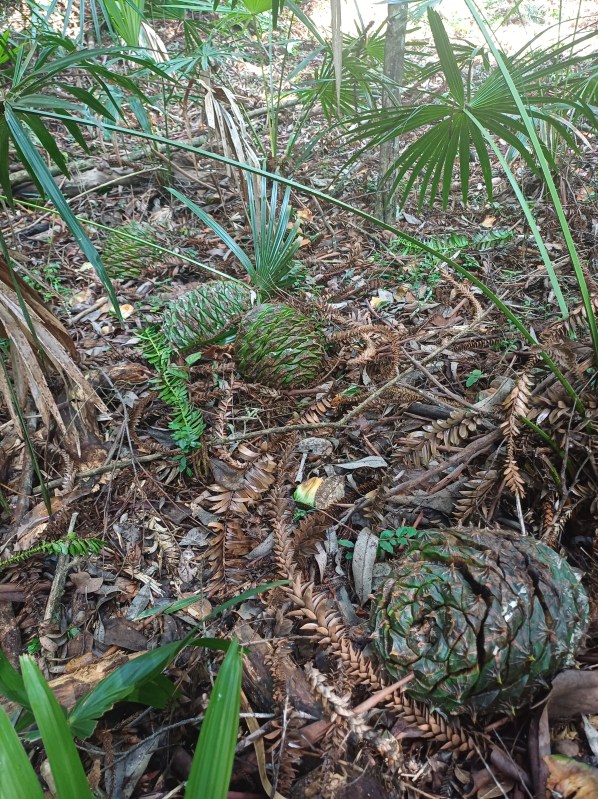
The bunya pine has been here for 200 million years.
Before humans.
Before kangaroos.
Before eucalypts.
It endured ice ages, extinctions,
continents tearing apart.
Dinosaurs once swallowed bunya cones whole!
Deep time stares back at us through these trees.
From a deep ecology perspective, this matters.
Because deep ecology begins with a radical shift:
humans are not the centre of the world.
We are participants in a far older, w i d e r ,
more-than-human community.
The bunya is not a resource.
Not a crop.
Not a symbol.
It is a being with its own evolutionary genius.
For at least 60,000 years,
First Nations cultures understood this.
When the bunya cones swelled,
word travelled along songlines.
Smoke signals called people
across vast distances.
And during bunya season, war stopped.
Hostilities were suspended.
Why?
Because the bunya mattered
more than conflict.
Because ecological law was stronger than grievance.
Because the gathering was central to life.
These were not “festivals” in the modern sense.
They were parliaments, trade fairs, marriage congresses,
universities and ceremonial renewals of law.
Trees were held as family relations —
not property, but responsibility.
And then, within a few violent decades, it was smashed.
Access blocked. Trees felled. Law ignored.
A relationship tens of thousands of years old, severed.
From a deep ecology perspective, this was ecological amputation.
Today, at Narara, we do not reenact the past.
We do not pretend a continuity we do not have.
We choose orientation.
We align, humbly, with an ancient songline.
The bunya gathering is older than the pyramids.
Older than Stonehenge.
Older than the Vedas.
What does it invite of us now?
To extend our sense of self beyond the human.
To include trees, waters, soils, ancestors and descendants.
To make decisions today
that will still make sense
60,000 years from now.
May future people say:
“That was when remembering began again.”
John says:
If this reflection speaks to you, I invite you to share it — and to comment:
What would it mean for you to live as participant, not master, in the wider community of life?
Discover more from Wordflower
Subscribe to get the latest posts sent to your email.
 Wordflower
As a non-Australian, this is foreign to me. But I looked it up – interesting connections to 60,000 and 200 million yrs. And edible inside. You write in a way that takes us on a time journey, making our human existence small in comparison. Deep.
LikeLiked by 1 person